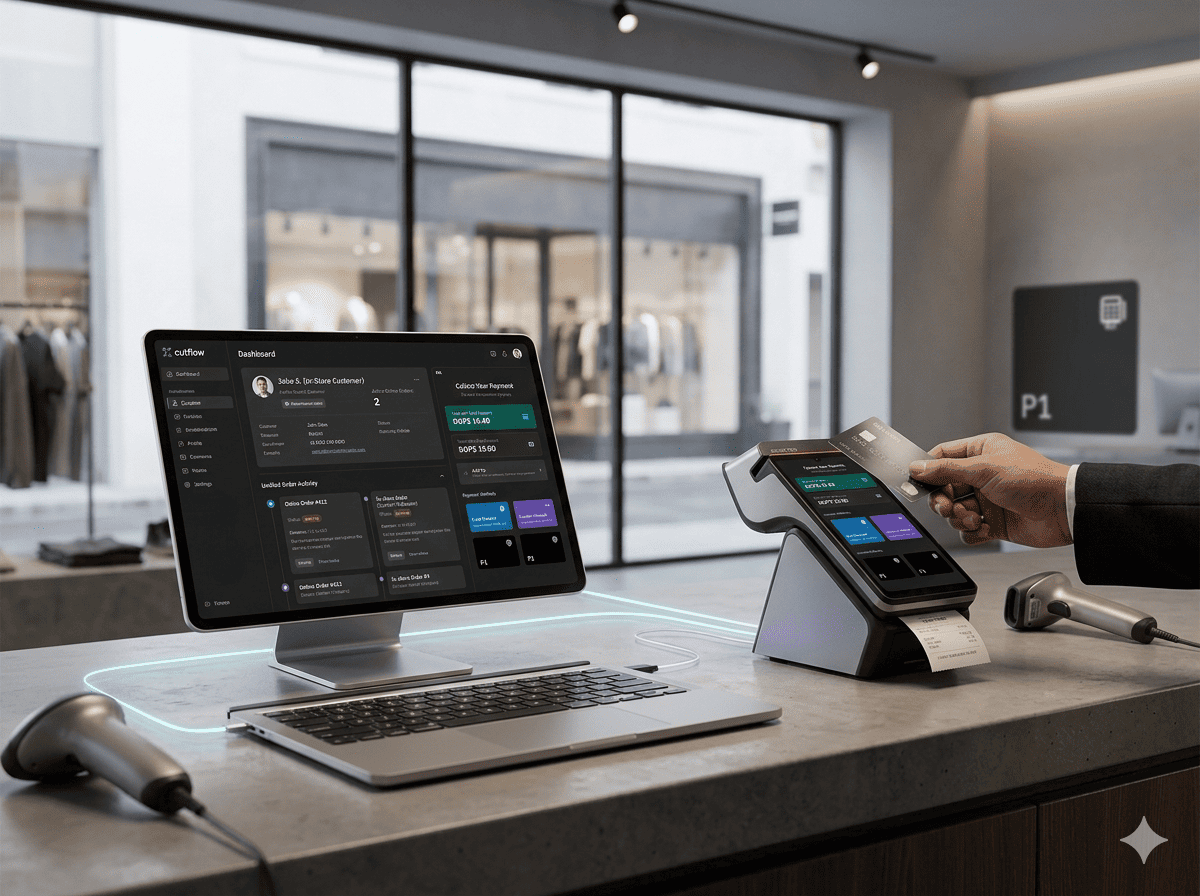
Hybrid commerce has redefined how customers interact with brands.
Today’s businesses operate across:
- Physical locations
- Online stores
- Mobile ordering
- Delivery platforms
- Embedded payment environments
But while acquisition strategies have evolved, retention often remains fragmented.
Engineering retention in hybrid commerce requires infrastructure — not isolated campaigns.
What Is Hybrid Commerce?
Hybrid commerce blends in-store and digital experiences into a unified customer journey.
A single customer might:
- Discover your brand on social media
- Visit a physical location
- Order online the next week
- Use mobile payments
- Redeem a digital loyalty reward
If these touchpoints aren’t connected, retention becomes inconsistent.
Retention in hybrid commerce depends on continuity.
Why Retention Breaks in Hybrid Models
Most businesses struggle with:
- Disconnected POS systems
- Separate online and offline data
- Fragmented customer profiles
- Manual marketing workflows
- Lack of cross-location recognition
The result?
Customers feel like strangers every time they interact with your brand.
That kills loyalty.
Retention Is a Systems Problem
Retention is not just a marketing function.
It requires:
- Unified transaction data
- Cross-channel customer recognition
- Real-time behavioral insights
- Automated engagement triggers
- Consistent reward logic
Without system architecture, retention efforts remain reactive.
With infrastructure, retention becomes predictable.
Build a Unified Customer Identity Layer
In hybrid commerce, identity is everything.
You need:
- Centralized customer profiles
- Linked purchase history
- Cross-location visibility
- Integrated online + in-store behavior
- Payment-linked customer recognition
When identity is unified, personalization becomes scalable.
Without identity, retention is guesswork.
Use Behavioral Triggers, Not Calendar Campaigns
Traditional marketing relies on scheduled campaigns.
Modern retention relies on behavior.
Examples:
- Re-engagement after inactivity
- Frequency-based rewards
- Upsell after repeat purchase
- Subscription offers for loyal buyers
- Personalized offers based on product affinity
Behavior-driven automation increases relevance — and relevance drives repeat revenue.
Align Payments With Retention Strategy
Embedded payments unlock retention opportunities.
When payments are integrated:
- Rewards can trigger instantly
- Purchase data updates in real time
- Loyalty programs sync automatically
- Cross-device experiences remain consistent
Payments should not be a checkout tool.
They should be a growth engine.
Scale Loyalty Across Locations
Multi-location businesses face a unique retention challenge.
Customers expect:
- Recognition across branches
- Consistent rewards
- Unified membership status
- Shared loyalty balance
Without centralized infrastructure, loyalty becomes location-specific.
That limits lifetime value.
Retention at scale requires cross-location intelligence.
Measure Retention With Precision
To engineer retention effectively, monitor:
- Repeat purchase rate
- Visit frequency
- Retention by cohort
- Churn rate
- Revenue per returning customer
- Loyalty participation rate
Data transforms retention from assumption into strategy.
From Fragmented Channels to Unified Experience
Hybrid commerce demands more than omnichannel marketing.
It demands:
- Unified infrastructure
- Intelligent automation
- Payment-integrated data
- Operational alignment
- Continuous optimization
When businesses engineer retention into their systems, growth becomes structural — not seasonal.
Final Thoughts
In hybrid commerce, retention cannot rely on manual campaigns or disconnected tools.
It must be engineered.
Businesses that unify identity, payments, operations, and engagement create an ecosystem where customers return naturally.
Retention is not an outcome.
It is architecture.
